Start with the date and the food
Plan where refrigerated and frozen food will go before you switch the appliance off. Use the model manual to allow enough time for defrosting and drying. A large block of ice can turn into a water problem during a move, especially when a freezer has been sitting unused. Do not leave this preparation until the vehicle arrives.
Describe the appliance as it is
Note whether it is a freestanding refrigerator, a built-in unit, an upright freezer or a chest freezer. Photograph it from far enough back to show the surrounding cabinet or doorway. Add its width, depth and height if you can measure safely. Mention damaged hinges, loose glass, spoiled contents or an ice-maker water connection. Those details can change the plan more than the brand name.
Prepare the space, not just the appliance
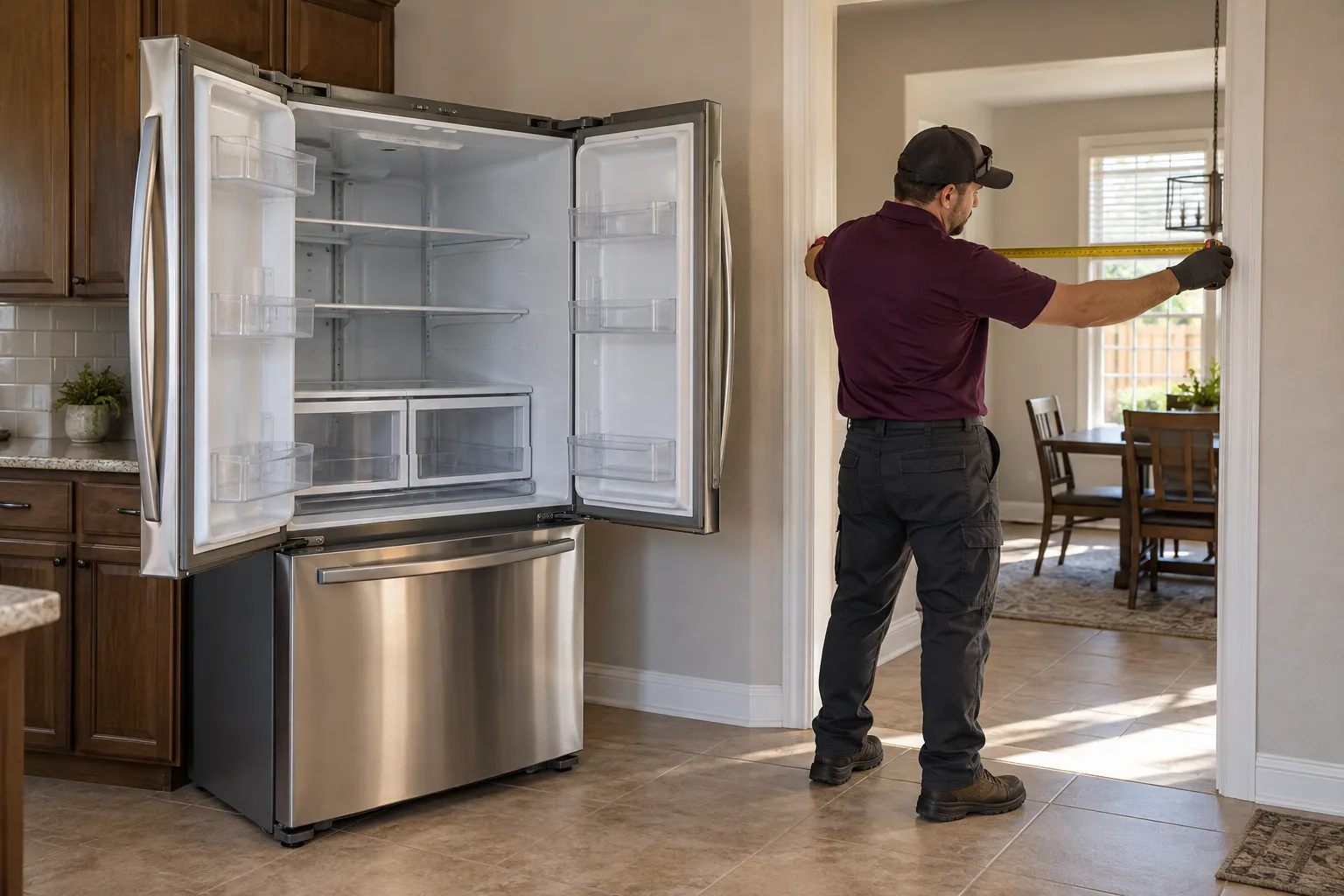
Clear belongings from the route and keep children and pets away from the work area. Measure the narrowest clear opening, including handles and the turn immediately beyond the doorway. Share photographs of steps and landings. Do not start taking doors off or dragging the appliance across a floor to test whether it fits. The people doing the move should agree on the handling plan.
Leave the cooling circuit intact
EPA advises consumers not to tamper with refrigeration equipment before disposal, including cutting lines or removing a compressor. A unit that no longer cools can still contain refrigerant. Ask the collecting provider how the appliance reaches an appropriate receiving facility. A claim that the item is “scrap metal” does not answer that question. EPA consumer disposal guidance.
Use this pickup checklist
Food and ice removed; manufacturer’s defrosting guidance followed; interior dry; water connection addressed by a competent person; shelves and loose parts discussed; route photographs available; stairs and loading position described; collection time agreed. Keep these notes with the appliance model so you can answer questions without another trip around the house.
Compare the available options
If you are buying a replacement, ask the retailer about its haul-away conditions before paying for a separate pickup. Check your existing waste provider’s appliance rules and any utility program eligibility. Compare the whole scope: inside collection, disconnection, stairs, disposal and timing. A lower headline price may describe a different job.
Sources and further reading
EPA consumer disposal guidance ↗Whirlpool refrigerator moving preparation ↗Sources checked October 19, 2026. Follow your model’s instructions and the rules of the provider handling the appliance.
Explore all preparation guides or review the complete appliance removal scope.