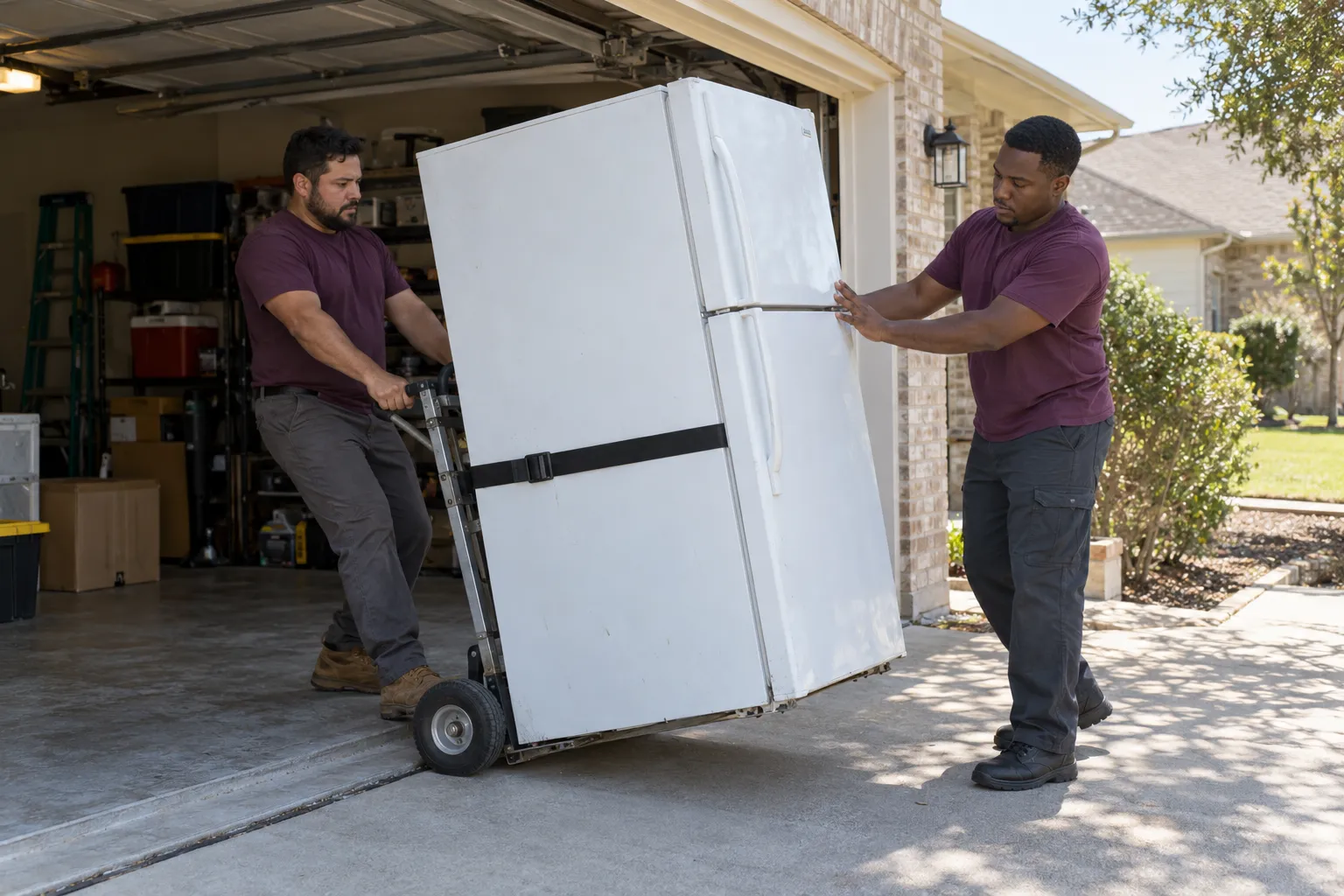
Describe the appliance and the job
Identify whether the unit is freestanding, built-in or under-counter. A standard kitchen fridge and an integrated unit may need very different preparation. Include an ice-maker water connection, loose shelves, broken glass or spoiled contents in the job description.
Before pickup
- Empty food and ice before the agreed pickup.
- Use the model manual to plan defrosting and drying.
- Have water and power connections made safe before moving.
- Measure the narrowest clear doorway and photograph tight turns.
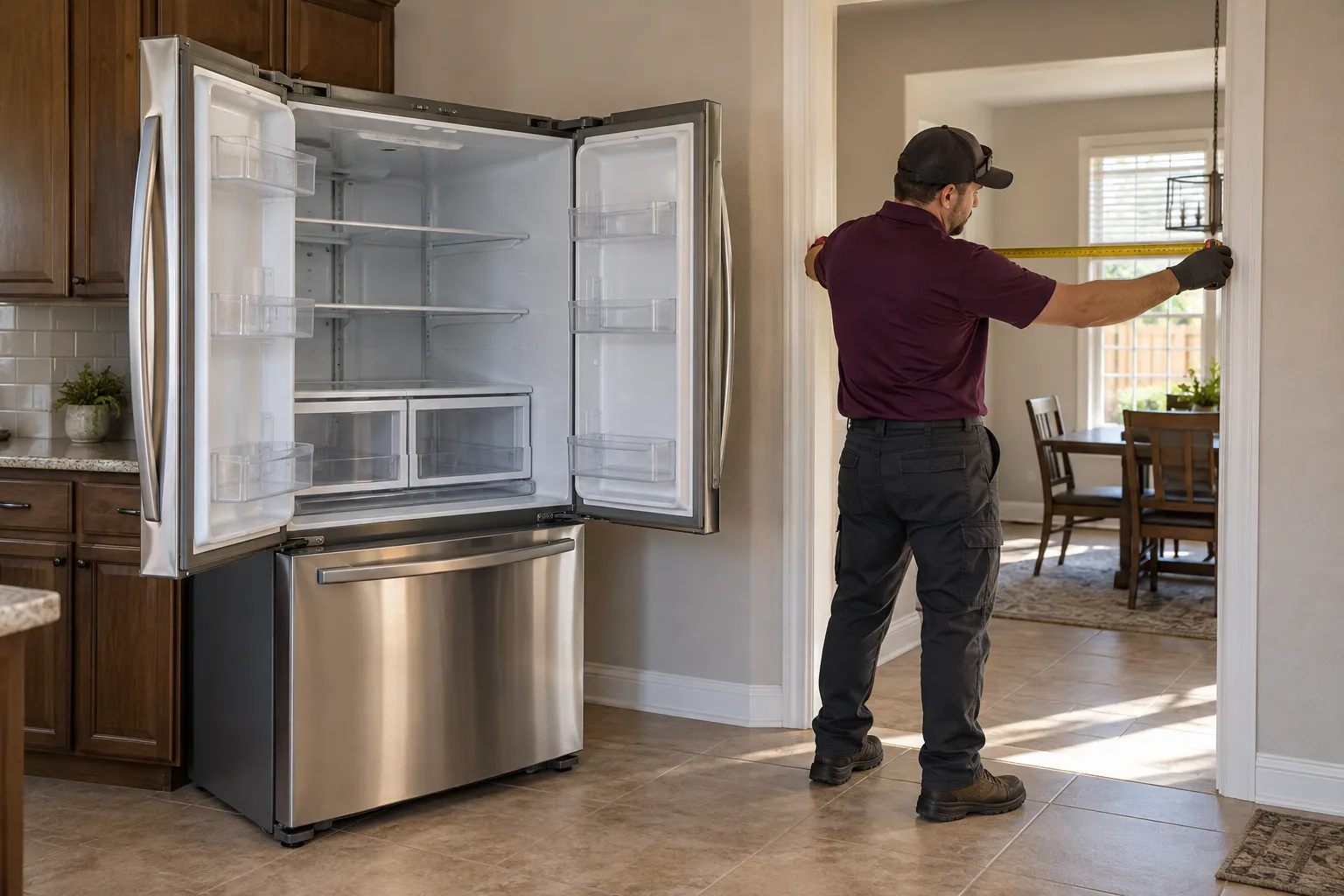
Agree on the boundaries
Keep the cooling system intact. Do not cut refrigerant lines or remove the compressor. Built-in panels and door removal require advance assessment rather than an assumption that the appliance will fit.
What affects the estimate?
Size, weight, stairs and access usually tell more than age alone. A second refrigerator in a detached garage adds another pickup point; mention it with the main unit.
Confirm acceptance, the full scope and the pickup address before making arrangements. Explore local pickup planning for nearby communities.
Refrigerator Removal questions
Does a broken fridge still contain refrigerant?
A cooling failure does not prove the refrigerant is gone. Treat the sealed system as intact and arrange an appropriate disposal route.
Should I remove the doors myself?
Discuss clearance with the person handling the move. Follow the model instructions and avoid unsupervised dismantling or leaving an appliance accessible to children.
What about a separate freezer?
Put it on the inventory as its own item. Our freezer page covers chest and upright designs.